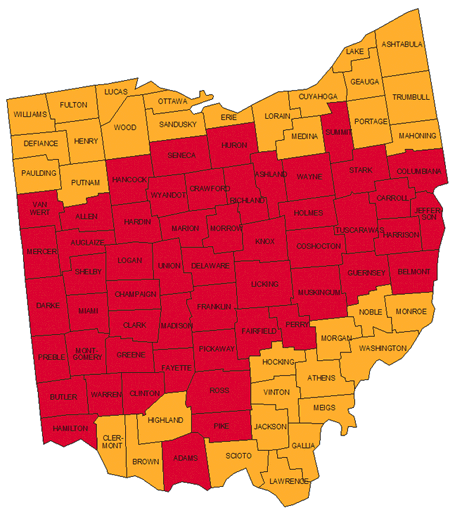
Zone 1 counties have a predicted average indoor radon screening level greater than 4 pCi/L (pico curies per liter) (red zones)
Highest Potential
Zone 2 counties have a predicted average indoor radon screening level between 2 and 4 pCi/L (orange zones)
Moderate Potential
Zone 3 counties have a predicted average indoor radon screening level less than 2 pCi/L (yellow zones)
Low Potential
I obtained my license in 2004 and as of October 31, 2008 I have performed 226 Radon tests. 59 of those test were over 4.0 pCi/L. 4.0 pCi/L is the EPA recommended level for corrective action. 26% or 1 out of 4 homes I have tested have had radon at or above 4.0 pCi/L. The highest levels I have recorded are 23.2 in Avon, 23.4 in Copley and 27.7 in Avon Lake.
Consumers Guide to Radon Reduction. I provide a hard copy of this publication if your radon levels are over 4.0 pCi/L.
What is Radon ? Radon is a radioactive, colorless, odorless, and tasteless gas. It is formed as natural deposits of uranium throughout the earth’s crust decay. As radon decay products are inhaled, they can alter the cells in the lungs. These alterations can increase the potential for getting lung cancer. Radon is the second leading cause of lung cancer behind smoking. An estimated 21,000 people die of radon related lung cancer each year. www.epa.gov/radon/pubs/citguide.html#overview
The amount of radon in a building is dependent upon several factors. These factors include the geology, a driving force, pathways into the building, and the ventilation rate. As the concentration of uranium is in the underlying soil increases, so does the strength of the radon. Radon is transported to buildings more easily through permeable soils. Buildings can create pressure differentials that will draw in the soil gases. Radon can enter the building through many paths such as cracks in the foundation, utility penetrations, sumps, and floor drains. The ventilation rate of the building affects the final radon concentration.
EPA has made the recommendation of no long-term radon exposures above 4 pico couries/liter (pCi/L). This action level was based on both health and economics. The only way to tell if a building has elevated levels of radon is to have it tested.
Sun Nuclear 1027 Radon Monitor
The Model 1027 has been evaluated and accepted by the U.S Department of Environmental Protection (EPA).
My monitors are calibrated yearly. Duplicate and cross checks are performed in accordance to the Ohio Department of Health and the EPA guidlines. The cost of the test depends on the location of the home and if a general inspection is performed. (See pricing) Here is a sample of the radon report you will receive upon completion of the test. The report will be emailed or sent thru a report upload service in a PDF document. Test time is 48 to 60 hours.
Granite Countertops and Radon Gas
At this time, the EPA does not believe sufficient data exists to conclude that the types of granite commonly used in countertops are significantly increasing indoor radon levels.
Home Buyers and Sellers Radon Video To view the EPA Buyer and Sellers guide to Radon click here.
Performing Home Inspections in Cleveland, Strongsville, Brecksville, Broadview Heights, North Royalton, Parma and surrounding areas.
 Home Safe Home Inspections